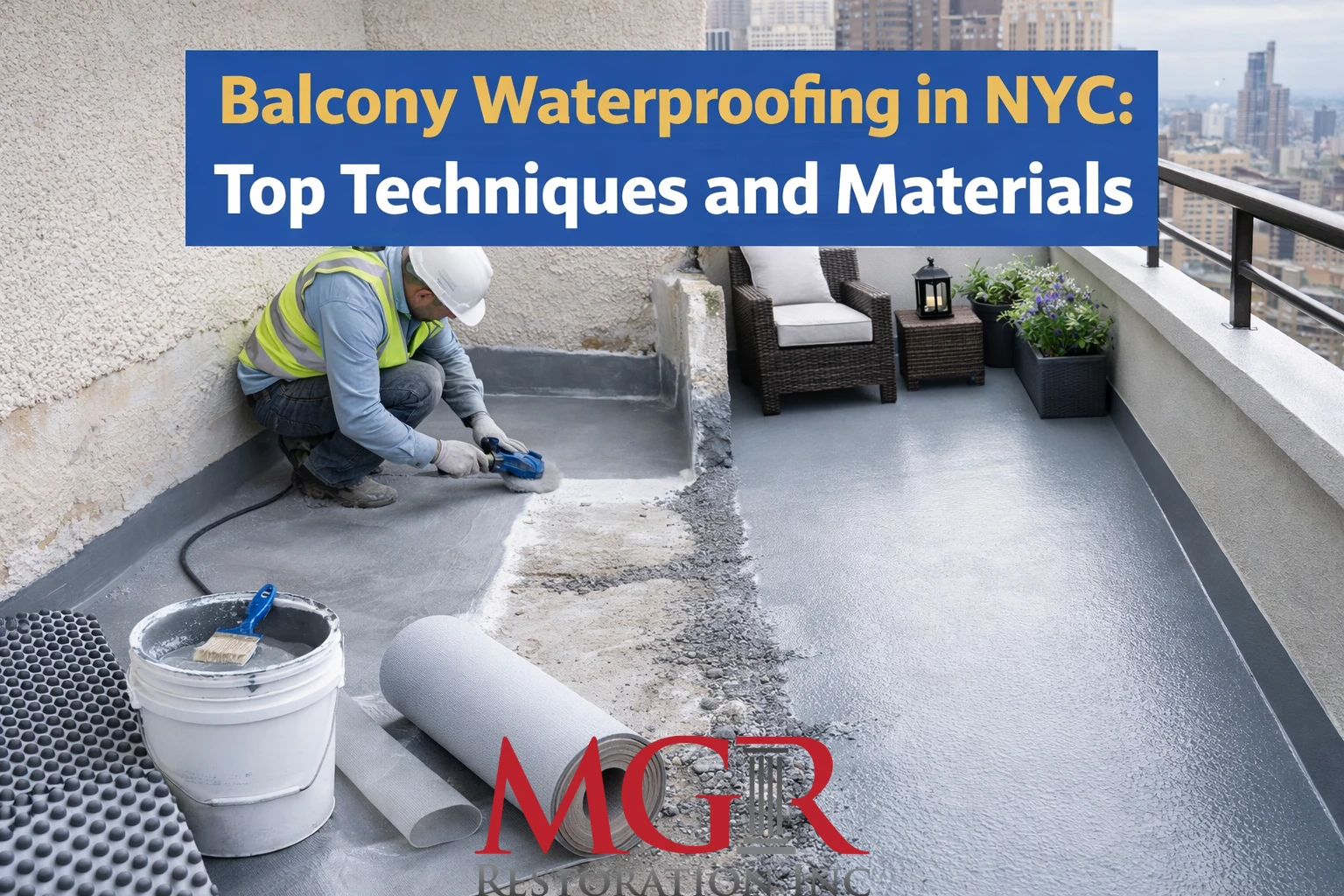
Balcony waterproofing in NYC is the process of protecting balconies from water damage using professional-grade materials and proven installation techniques. In a city like New York—where buildings face heavy rain, snow, and freeze-thaw cycles—proper waterproofing is essential for long-term structural safety.
At MGR Restoration Inc, we specialize in balcony waterproofing solutions designed specifically for NYC buildings. Our team focuses on durability, code compliance, and long-lasting performance to help property owners avoid costly repairs.
Why Balcony Waterproofing Is Critical in NYC
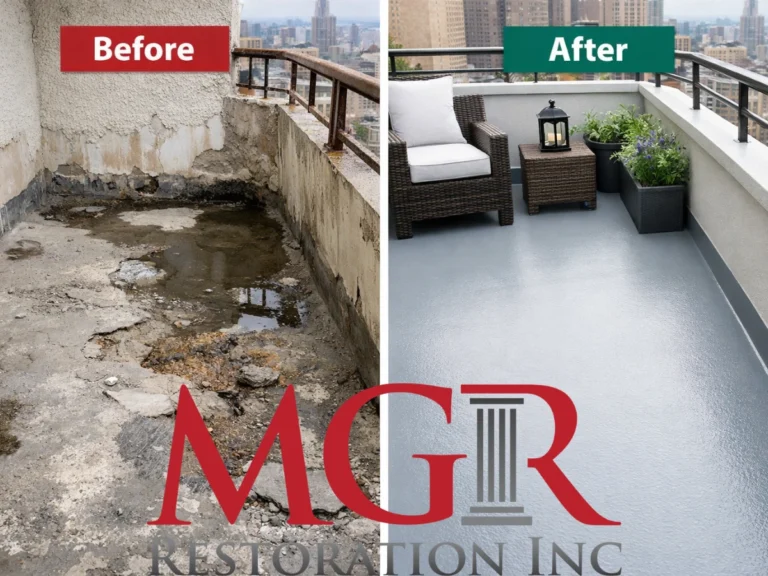
NYC balconies are exposed to more stress than most other parts of a building. Over time, water seeps into cracks and joints. When temperatures drop, trapped water freezes and expands. This causes concrete to crack and membranes to fail.
Key reasons balcony waterproofing matters
- Prevents water leaks into apartments below
- Protects concrete and steel reinforcement
- Stops mold and mildew growth
- Extends the life of the balcony structure
- Helps meet NYC building and safety standards
- Reduces long-term repair costs
Common Causes of Balcony Water Leaks
Understanding the cause helps choose the right solution.
Most common issues
- Cracks in concrete slabs
- Failed or missing waterproof membranes
- Poor slope causing standing water
- Damaged flashing or edge details
- Old tile systems without waterproofing underneath
- Weather exposure and UV damage
In NYC, older buildings are especially vulnerable because many balconies were built before modern waterproofing standards.
Top Balcony Waterproofing Techniques Used in NYC
There is no one-size-fits-all solution. The best method depends on the balcony type, traffic level, and exposure.
1. Liquid-Applied Waterproofing Membranes
Liquid membranes are one of the most popular balcony waterproofing solutions in NYC.
How it works
A liquid coating is applied over the surface. Once cured, it forms a seamless, flexible waterproof layer.
Common materials
- Polyurethane membranes
- Elastomeric coatings
- Acrylic waterproofing systems
Benefits
- Seamless (no joints to fail)
- Excellent crack-bridging ability
- UV-resistant options available
- Ideal for complex shapes and details
Best for
- Concrete balconies
- Renovation projects
- Balconies with irregular layouts
2. Sheet Membrane Waterproofing Systems
Sheet membranes are factory-made waterproof layers installed over the balcony surface.
Common types
- PVC membranes
- TPO membranes
- EPDM rubber membranes
- Rubberized asphalt sheets
Benefits
- Consistent thickness
- High durability
- Excellent water resistance
- Long service life
Limitations
- Requires skilled installation
- Seams must be sealed correctly
Best for
- New construction
- Large or commercial balconies
- High-traffic areas
3. Cementitious Waterproofing
Cement-based waterproofing is a rigid system applied as a slurry or coating.
Benefits
- Strong bond with concrete
- Breathable material
- Cost-effective
Limitations
- Limited flexibility
- Not ideal for areas with heavy movement
Best for
- Low-movement concrete balconies
- Areas with protective finishes on top
4. Waterproofing Under Tile Systems
Many NYC balconies are finished with tiles or pavers. Waterproofing must always go under the tile.
Typical system layers
- Concrete slab
- Primer
- Waterproof membrane
- Drainage layer
- Tile adhesive or pedestal system
- Tile or pavers
Without proper waterproofing below tiles, water becomes trapped and causes hidden damage.
Best Waterproofing Materials for NYC Weather
NYC’s climate demands materials that handle temperature changes, moisture, and UV exposure.
Top-performing materials
- Polyurethane membranes – flexible and durable
- Elastomeric coatings – excellent for crack movement
- PVC and TPO sheets – strong and long-lasting
- Hybrid systems – combine flexibility and strength
Choosing the right material depends on:
- Balcony usage
- Exposure level
- Structural movement
- Finish type
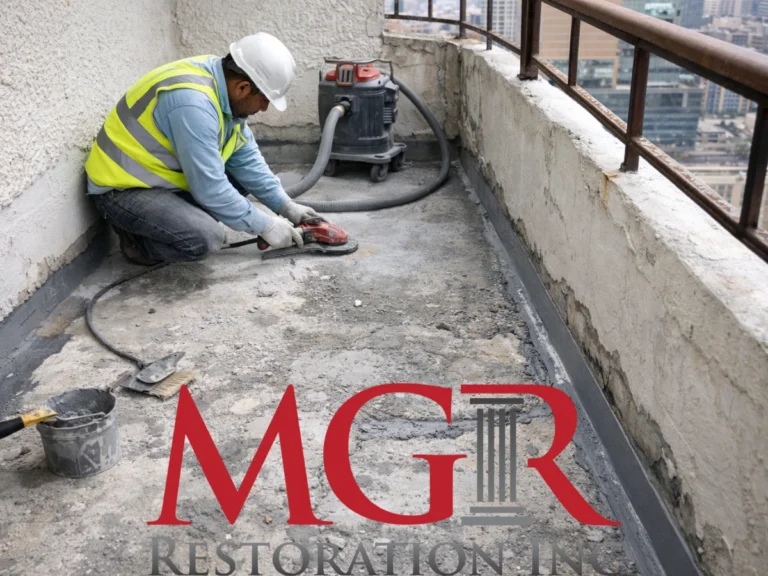
Surface Preparation: The Most Important Step
Even the best waterproofing system will fail without proper preparation.
Essential prep steps
- Remove dirt, dust, and old coatings
- Repair cracks and damaged concrete
- Ensure correct slope for drainage
- Install proper flashing and edge details
- Apply manufacturer-approved primer
Drainage and Slope: Often Overlooked but Critical
Waterproofing alone is not enough. Water must be directed away from the surface.
Best practices
- Minimum slope toward drains or edges
- Install drainage mats where needed
- Use scuppers or internal drains
- Protect waterproof layers from clogging
Poor drainage is one of the top reasons balconies fail in NYC.
NYC-Specific Building Code & Compliance Considerations
Balcony waterproofing in NYC must meet local building and safety requirements.
Important considerations
- Waterproofing over occupied spaces needs higher protection
- Fire-rated assemblies may be required
- Load-bearing capacity must be maintained
- Materials should meet local performance standards
Hiring experienced professionals familiar with NYC codes helps avoid violations and rework.
Maintenance Tips to Extend Waterproofing Life
Waterproofing is not “install and forget.”
Simple maintenance steps
- Inspect annually for cracks or damage
- Clean drains and scuppers regularly
- Reseal joints and edges when needed
- Avoid drilling or penetrating the membrane
Regular inspections can add years to the system’s lifespan.
How Long Does Balcony Waterproofing Last?
The lifespan depends on the system and maintenance.
| System Type | Average Lifespan |
|---|---|
| Liquid-applied membranes | 10–20 years |
| Sheet membrane systems | 20–30+ years |
| Cementitious coatings | 5–10 years |
Should You Hire a Professional in NYC?
Balcony waterproofing is not a basic DIY project, especially in NYC buildings.
Why professional installation matters
- Correct material selection
- Proper detailing at edges and penetrations
- Code compliance
- Warranty protection
Mistakes can lead to expensive interior damage and legal issues.
Why Choose MGR Restoration Inc for Balcony Waterproofing in NYC
Choosing the right contractor is just as important as choosing the right waterproofing system.
MGR Restoration Inc brings hands-on experience, technical expertise, and local knowledge to every project.
What sets us apart
- NYC-focused balcony waterproofing expertise
- Proven systems for residential and commercial buildings
- Code-compliant installation methods
- Attention to drainage, slope, and edge detailing
- Long-lasting waterproofing solutions