
Parking Garage Repair
Is your parking garage showing signs of cracking concrete, water leaks, or structural deterioration? You’re not alone. Parking garages in New York City face some of the harshest conditions of any structure — constant vehicle traffic, de-icing salt exposure, freeze-thaw cycles, and moisture intrusion year-round. Left unaddressed, these issues escalate rapidly into costly structural failures and dangerous conditions for drivers and pedestrians alike.
At MGR Restoration, we are NYC’s trusted experts in parking garage repair and structural rehabilitation. With over 20 years of hands-on experience restoring garages across Manhattan, Brooklyn, Queens, the Bronx, and Staten Island, our certified team delivers repairs that are built to last — on time, on budget, and fully compliant with NYC Local Law 126.
Whether your facility needs minor concrete patching or a comprehensive structural overhaul, we have the skills, equipment, and experience to handle it all.
Got a project in mind? Let’s chat about bringing your construction vision to life!
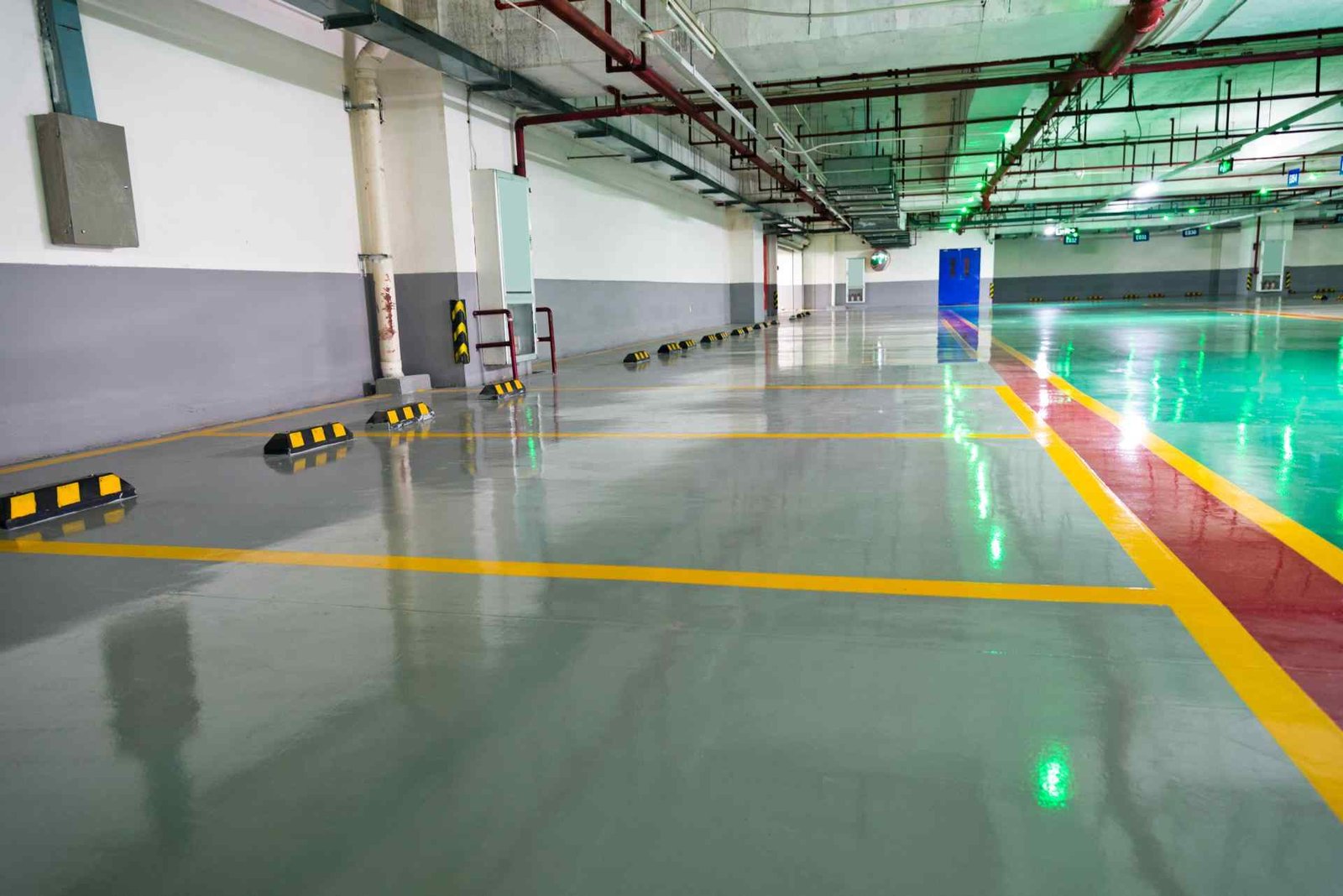
Why Parking Garages Deteriorate — and Why Fast Action Matters
Parking structures are among the most structurally demanding buildings in any city. Unlike office buildings or residential towers, garages endure daily cycles of:
- Vehicle load stress — constant rolling pressure from cars and trucks causes micro-fractures in concrete slabs over time.
- De-icing salt damage — chloride ions from road salts penetrate concrete and corrode the steel rebar inside, causing expansion cracks and spalling.
- Water infiltration — even hairline cracks allow moisture to seep into structural members, accelerating decay.
- Freeze-thaw cycles — water trapped inside concrete expands when it freezes, widening cracks from within.
- Carbonation — atmospheric CO₂ reacts with concrete over decades, reducing its alkalinity and leaving rebar vulnerable to rust.
Once rebar begins to corrode, it swells and pushes concrete apart from the inside — a process called “concrete cancer.” Early intervention through professional repair services dramatically reduces long-term costs and prevents safety hazards.
The cost of ignoring parking garage damage is always higher than the cost of fixing it early.
Our Parking Garage Repair Services in NYC
We offer a full spectrum of parking garage repair and restoration services, customized to the specific condition and construction type of your facility.
Structural Condition Assessment & Leak Investigation
Every successful repair begins with an accurate diagnosis. Our engineers perform thorough visual inspections, combined with non-destructive testing (NDT) methods including:
- Hammer sounding to detect delamination
- Ground-penetrating radar (GPR) to locate rebar corrosion
- Chloride and carbonation testing
- Core sampling for concrete strength analysis
- Infrared thermography for moisture mapping
Our detailed condition reports give you a clear picture of the damage, prioritized by severity — so you can plan repairs strategically and budget effectively.
Concrete Crack Repair & Spall Patching
Cracks and spalled concrete are the most common issues we encounter in NYC parking garages. Our repair approach depends on the type and cause of damage:
- Epoxy injection for structural cracks that must be bonded and load-bearing capacity restored
- Polyurethane injection for active leaking cracks — flexible enough to handle movement
- Polymer-modified concrete patching for spalled surfaces, providing a strong bond and color-matching finish
- Low-shrink repair mortars for overhead and vertical repairs
- Shotcrete for large-scale slab and wall rebuilding
All materials used meet or exceed ACI (American Concrete Institute) standards for structural repair.
Rebar & Steel Reinforcement Restoration
Corroded rebar is the root cause of most serious structural deterioration in parking garages. Our process:
- Concrete removal around affected rebar using jackhammers or hydro-demolition
- Rebar cleaning by mechanical wire brushing or sandblasting to remove all rust
- Rebar replacement where section loss exceeds 25%
- Corrosion inhibitor application — zinc-rich primers or migratory inhibitors
- Cathodic protection systems for high-risk areas
- Concrete reinstatement with compatible repair mortar
Properly restored rebar significantly extends the structural lifespan of any parking facility.
Waterproofing & Traffic Coating Systems
Water is the single biggest enemy of parking structures. Our waterproofing solutions create a durable barrier against moisture, oil, and chemical attack:
- Urethane traffic coatings — seamless, flexible membranes that handle movement and heavy traffic
- Epoxy coatings — hard-wearing finish for ground-level and interior decks
- Crystalline waterproofing — penetrates concrete and seals capillary pores from within
- Negative-side waterproofing — applied to below-grade walls and ceilings to stop active water ingress
- Deck membranes — fully bonded waterproof systems beneath wearing courses on elevated decks
All coatings are slip-resistant and comply with OSHA safety standards.
Expansion Joint Repair & Replacement
Failed expansion joints are among the most common causes of water infiltration in parking decks. We install and replace:
- Elastomeric compression seals
- Poured-in-place urethane sealants
- Metal nosing joints for high-traffic areas
- Structural joint covers for large movement gaps
We select joint systems based on anticipated movement, traffic load, and environmental exposure — ensuring long-term performance without frequent re-sealing.
Drainage System Repairs
Poor drainage accelerates deterioration across every surface of a garage. Our drainage restoration services include:
- Cleaning and relining clogged deck drains and scuppers
- Replacing deteriorated cast iron or PVC drain bodies
- Correcting slope and grade issues to promote positive drainage
- Installing new trench drain systems where ponding is chronic
- Repairing or replacing leader pipes and horizontal mains
Proper drainage dramatically reduces the amount of water and chemicals that penetrate your garage structure.
Carbon Fiber & Structural Strengthening
When structural elements are compromised but replacement is not practical, carbon fiber reinforcement offers a proven, cost-effective solution:
- Carbon fiber wrapping for columns and beams — dramatically increases load capacity
- Near-surface-mounted (NSM) rods for slab and beam flexural strengthening
- Fiber-reinforced polymer (FRP) laminates for shear strengthening
- Beam and slab strengthening for facilities being adapted to heavier vehicle loads
Carbon fiber systems are lightweight, non-corrosive, and add minimal depth — ideal for garages with headroom constraints.
Column, Beam & Slab Repairs
Heavily deteriorated structural members require more than surface patching. We rebuild damaged elements using:
- Form-and-pour repairs for columns and beams
- Shotcrete (gunite) application for large surface areas and overhead repairs
- Post-tensioned slab repair — specialized work requiring certified engineers
- Bridge jacking and bearing pad replacement for elevated deck structures
Our structural engineers oversee all major element repairs and provide stamped documentation for DOB filing.
Post-Tension Repairs
Post-tensioned parking structures require highly specialized repair expertise. Our team handles:
- Tendon inspection and assessment
- Anchor pocket repairs
- Grouting of voids in bonded systems
- Tendon replacement in unbonded systems
- Restressing of slack tendons
We work under the supervision of licensed structural engineers with post-tensioning certification.
Our Proven Track Record in NYC Parking Garage Restoration
MGR Restoration has successfully completed parking garage restoration projects across New York City and the tri-state area. Our clients include some of the largest parking operators and property owners in the region:
- LAZ Parking — multiple facilities across NYC boroughs
- MPG / Icon Parking — concrete restoration and waterproofing
- Edison Parkfast — structural rehabilitation
- Parkplus Automated Parking — specialty structural work
- LaGuardia Airport Terminal B — parking garage façade and deck restoration
- UPS Red Hook Facility — one of the largest UPS parking structures in NYC
- DHL 10th Avenue Service Outlet, NYC
- American Dream Mall, Rutherford NJ — large-scale parking structure rehabilitation
- Maimonides Medical Center, Brooklyn — hospital facility parking restoration
Our experience spans open-deck garages, below-grade structures, automated parking systems, and airport facilities — giving us unmatched versatility on any project type.
NYC Local Law 126 — Complete Guide for Property Owners
Local Law 126 of 2021 requires periodic structural inspections of all parking structures in New York City. Modeled after the successful Façade Inspection Safety Program (FISP/Local Law 11), LL126 establishes a mandatory inspection cycle to catch structural deterioration before it becomes a public safety crisis.
The law took effect January 1, 2022 and applies to virtually all parking garages in the five boroughs.
Who Must Comply with Local Law 126?
The law covers:
- All buildings or building sections used for parking or vehicle storage
- Enclosed and open parking garages as defined by the NYC Building Code
- Below-grade (underground) parking areas
Exemptions:
- Automotive repair shops, service stations, and showrooms
- Garages accommodating fewer than 3 vehicles
- Outdoor surface parking lots (no structure)
- Private garages attached to 1- and 2-family homes
Inspection Sub-Cycle Schedule
LL126 operates on 6-year cycles, broken into 3 sub-cycles by geographic district:
| Sub-Cycle | Dates | Coverage Area |
|---|---|---|
| A | Jan 1, 2022 – Dec 31, 2023 | Manhattan Community Districts 1–7 |
| B | Jan 1, 2024 – Dec 31, 2025 | Manhattan Districts 8–12 + All Brooklyn |
| C | Jan 1, 2026 – Dec 31, 2027 | All of Bronx, Queens & Staten Island |
After the first full cycle, subsequent inspections continue on the same 6-year rolling schedule.
The Inspection Process — Step by Step
- Hire a QPSI — a Qualified Parking Structure Inspector, who must be a NYS licensed professional engineer certified by NYC DOB
- Document review — drawings, prior inspection reports, violation history
- Visual inspection — all accessible surfaces, structural members, drainage, joints
- Physical testing — minimum 10% of each structural element type; deteriorated areas get priority
- Condition evaluation — accounting for age, environment, loading history, and maintenance
- Report filing — submitted to DOB within 60 days of the final inspection date
- Annual observation checklist — prepared by QPSI for use between formal inspections
Structure Classifications Under LL126
| Classification | Meaning | Required Action |
|---|---|---|
| Safe | No hazards; sound condition | No immediate repairs required |
| SREM | Safe but repairs needed | Repairs within the cycle; follow-up report within 3 years |
| Unsafe | Immediate hazard present | Safety measures within 24 hours; repairs within 90 days |
Penalties for Non-Compliance
| Violation | Penalty |
|---|---|
| Late report filing | $1,000 per month |
| Failure to file | $5,000 per year |
| Failure to correct Unsafe conditions | $1,000 per month |
| Failure to address SREM conditions | $2,000 (one-time) |
Filing fees:
- Initial report: $305
- Amended/follow-up report: $85
- Extension request: $65
How MGR Restoration Helps with LL126 Compliance
We partner with certified QPSIs to offer a complete LL126 compliance solution:
- Coordinate the structural inspection
- Provide detailed repair scope based on QPSI findings
- Execute all required repairs efficiently to meet deadlines
- Support DOB report filing and violation removal
- Provide annual observation support between inspection cycles
Warning Signs Your Parking Garage Needs Immediate Repair
Don’t wait for a DOB violation or a safety incident. Watch for these signs of deterioration:
- Visible concrete cracks — especially horizontal cracks on columns or diagonal cracks near supports
- Spalling or chunks of concrete falling — a serious hazard to vehicles and people below
- Rust stains on concrete surfaces — indicates corroding rebar underneath
- Water dripping through ceilings or deck soffits — active water infiltration
- Ponding water on deck surfaces — failed drainage or improper slope
- Leaking or deteriorated expansion joints — allows water to penetrate structural joints
- Efflorescence (white powder deposits) — mineral salts carried by water through concrete
- Delamination sounds — hollow sound when concrete is tapped indicates loss of bond
- Tilted or displaced bollards or barriers — potential slab movement underneath
If you notice any of these conditions, contact us for a free inspection before the situation worsens.
Why Choose MGR Restoration for Parking Garage Repair?
Choosing the right contractor for parking garage repair is critical. Improper repairs can make problems worse, void warranties, and create DOB issues. Here’s why NYC property owners trust MGR Restoration:
✔ 20+ Years of Specialized Experience — We have repaired hundreds of parking structures across every borough and structure type.
✔ In-House Engineering Support — Our team works alongside licensed structural engineers for complex assessments and stamped drawings.
✔ Local Law 126 Expertise — We know the compliance landscape inside and out and help clients navigate inspections, classifications, and filing requirements.
✔ Quality Materials Only — We use manufacturer-specified products from Sika, BASF, Sherwin-Williams, W.R. Meadows, and other leading suppliers.
✔ Minimal Disruption — We schedule work around your facility’s operating hours to minimize downtime and keep your parking revenue flowing.
✔ Comprehensive Warranties — All our structural and waterproofing repairs are backed by written workmanship warranties.
✔ Transparent Pricing — Detailed line-item proposals with no hidden costs or change-order surprises.
Get a Free Parking Garage Inspection in NYC
Don’t wait for a DOB violation notice or a safety incident to take action. MGR Restoration offers free, no-obligation structural assessments for parking garages across New York City and the surrounding area.
Our team will:
- Inspect your facility top to bottom
- Identify and document all areas of concern
- Provide a prioritized repair plan
- Give you a clear, itemized estimate
- Advise you on Local Law 126 compliance status
Call us at 718-240-0000 or fill out our online contact form to schedule your free inspection. We respond within 24 hours.
NYC LOCAL LAW 126 KEY INFORMATION AND FAQs:
What is Local Law 126?
Local Law 126, enacted in 2021, mandates routine structural inspections for parking structures throughout New York City. The purpose of this law is to promote public safety by detecting and addressing structural issues before they pose a danger.
This law outlines a comprehensive inspection schedule, detailed reporting protocols, and a classification system for parking structure conditions. It's part of NYC’s broader commitment to building safety, like the Façade Inspection Safety Program (FISP) for building exteriors:
Who Must Comply?
- The law applies to most parking facilities within New York City, including:
- Buildings or building sections used for vehicle parking or storage
- Enclosed and open parking garages, as defined by the NYC Building Code
- Below-grade (underground) parking areas
Exemptions include:
- Automotive service stations, showrooms, and repair shops
- Garages that accommodate fewer than three vehicles
- Outdoor, unattached open parking lots
- Private garages attached to single- and two-family residences
What are Key Deadlines & Inspection Cycles?
Compliance is structured in six-year cycles, broken into three sub-cycles based on location:
- Sub-cycle A (Jan 1, 2022 – Dec 31, 2023): Manhattan Community Districts 1–7
- Sub-cycle B (Jan 1, 2024 – Dec 31, 2025): Manhattan Community Districts 8–12 and all Brooklyn Districts
- Sub-cycle C (Jan 1, 2026 – Dec 31, 2027): All districts in the Bronx, Queens, and Staten Island
What is Inspection Process?
The inspection process includes the following steps:
- Engage a Qualified Parking Structure Inspector (QPSI): A New York State licensed professional engineer certified by the NYC Department of Buildings.
- Document Review: The inspector reviews relevant drawings, past reports, and violation histories.
- Visual Inspection: A comprehensive assessment of all visible surfaces.
- Physical Testing: At least 10% of each structural element type (e.g., slabs, columns, beams) must undergo physical testing, with an emphasis on deteriorated areas.
- Condition Evaluation: Based on the building’s age, environment, structure type, and maintenance history.
- Report Submission: A detailed report, including photographs and repair recommendations, must be filed within 60 days of the final inspection.
- Annual Checklists: The QPSI must create an annual observation checklist to be used between formal inspections.
What are Structure Classifications?
Upon inspection, a structure will be classified as one of the following:
- Safe: No issues requiring immediate action; safe until next cycle.
- SREM (Safe with Repair and/or Engineering Monitoring): Currently safe but requires repair or monitoring to prevent future deterioration. Repairs must be completed within a set period, with a follow-up report submitted within three years.
- Unsafe: Immediate hazards exist. Owners must implement safety measures (e.g., barriers, protection), and complete necessary repairs within 90 days unless granted an extension.
Penalties for Non-Compliance
Failure to meet the requirements of Local Law 126 can result in the following penalties:
- Late report filing: $1,000 per month
- Failure to file: $5,000 annually
- Failure to correct Unsafe conditions: $1,000 per month
- Failure to address SREM conditions: $2,000 (one-time fine)
Associated filing fees include:
- Initial inspection report: $305
- Amended or follow-up report: $85
- Extension request: $65
How MGR Restoration Can Assist?
MGR Restoration can provide expert structural repair services to help property owners remain in full compliance with Local Law 126. Their services ensure that your parking facility is safe, maintained, and free of violations.