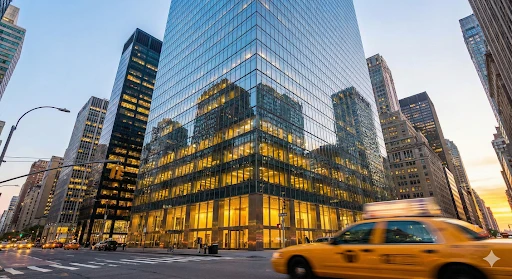
If you own or manage a building in New York City, you likely know the term Local Law 11. It is now called the Facade Inspection Safety Program (FISP).
It can feel overwhelming. You have deadlines, Department of Buildings (DOB) rules, and safety concerns. But you don’t have to face it alone.
This guide will explain exactly what you need to know. We will show you how to find the best Local Law 11 contractors in New York City to keep your building safe and compliant.
What is Local Law 11 (FISP)?
Local Law 11, or FISP, is a safety law in New York City. It requires owners of buildings taller than six stories to have their exterior walls inspected every five years.
The goal is simple: Prevent falling debris.
The city wants to make sure bricks, concrete, and terracotta do not fall and hurt pedestrians. To do this, you must hire a Qualified Exterior Wall Inspector (QEWI). This person is usually a licensed architect or engineer.
The 3 Inspection Categories
After an inspection, your building gets one of three grades:
SAFE: The building is in good condition. No repairs are needed.
SWARMP (Safe With A Repair and Maintenance Program): The building is safe for now, but it has damage. You must fix it by a specific date, or it will become “Unsafe” in the next cycle.
UNSAFE: The building has dangerous problems. You must install protection (like a sidewalk shed) immediately and start repairs right away.
Note: If your building is marked “Unsafe,” you typically have 30 to 90 days to start fixing it.
Why Hiring a Local Specialist Matters
New York City is not like other cities. We have strict rules, heavy traffic, and old buildings. You cannot hire just any general contractor. You need a Local Law 11 specialist.
Here is why “local” matters for your search:
DOB Knowledge: A local contractor knows how to navigate the NYC Department of Buildings’ online system (DOB NOW).
Sidewalk Sheds: They know exactly how to set up scaffolding that meets city codes without blocking busy sidewalks.
Historic Materials: Many NYC buildings use specific stones or bricks. A local pro knows how to match these materials perfectly.
5 Steps to Choose the Right Contractor
Finding the right partner is the most important step. Use this checklist to screen potential companies.
1. Check Their Experience with FISP
Ask them specifically about FISP Cycle 9 and the upcoming Cycle 10.
2. Look for “Turnkey” Solutions
The best contractors handle everything. This includes:
Setting up the sidewalk shed.
Getting the work permits.
Doing the masonry and waterproofing.
Removing the shed when finished.
3. Verify Insurance and Safety
Facade work is dangerous. Your contractor must have high-level liability insurance. This protects you if an accident happens.
4. Ask About Their QEWI Relationships
Contractors do the work, but the QEWI (the inspector) must sign off on it. The best contractors have strong relationships with top engineers and architects. This helps the project move faster.
5. Read Local Reviews
Look for reviews from other NYC building owners. Did the contractor finish on time? Did they communicate well?
Common Local Law 11 Repairs
When you hire a contractor for FISP compliance, they will likely perform these tasks:
Brick Pointing: Fixing the mortar between bricks to stop water leaks.
Lintel Replacement: Replacing the steel support bars above windows.
Parapet Rebuilding: Fixing the low wall at the edge of your roof.
Terracotta Repair: Restoring decorative clay pieces on historic buildings.
Waterproofing: Sealing the building to prevent future freeze/thaw damage.
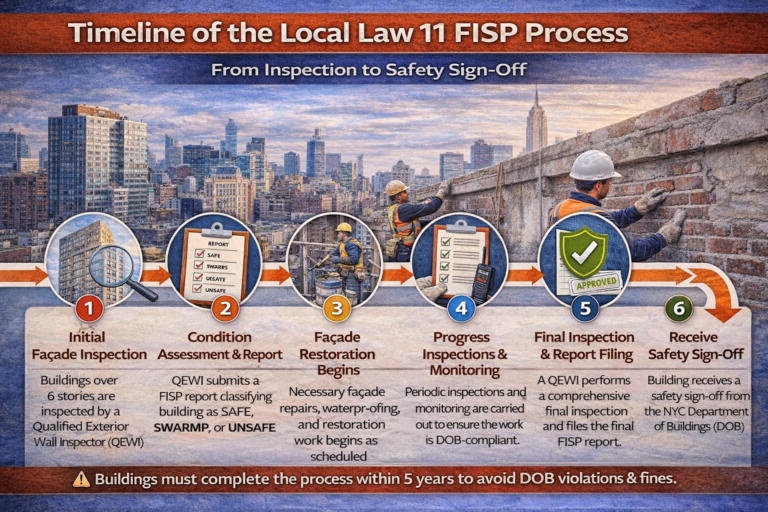
The Repair Timeline: What to Expect
Here is a simple timeline of a typical project.
Inspection: The QEWI inspects your building.
Filing: They file a report with the DOB.
Bidding: If repairs are needed, you get bids from contractors (like MGR Restoration).
Mobilization: The contractor installs the sidewalk shed and safety netting.
Restoration: The crew repairs the facade.
Sign-off: The QEWI inspects the work and files an “Amended Report” to change your status to SAFE.
Shed Removal: The scaffolding comes down.
Frequently Asked Questions (FAQ)
Costs vary widely. A simple inspection might cost a few thousand dollars. However, if you need major masonry repairs or steel replacement, costs can go much higher. It depends on your building’s size and condition.
If you do not fix SWARMP items by the deadline, the DOB automatically downgrades your building to UNSAFE. You may face heavy fines and higher repair costs later.
You must file a report every 5 years. The current cycle (Cycle 9) ends soon, and Cycle 10 will begin. Check your building’s block number to find your specific filing window.
Technically, yes, but it is risky. We highly recommend using a contractor who specializes in exterior restoration. They understand the specific requirements of the QEWI and the DOB.
Ready to Secure Your Building?
Don’t wait for a violation letter. Ensure your building is safe, compliant, and beautiful.
At MGR Restoration, we specialize in Local Law 11 repairs and facade restoration. We work directly with your QEWI to get your building marked SAFE as quickly as possible.