If your NYC building is over six stories tall, you are required by law to have your facade inspected every five years. This law — officially called the Facade Inspection Safety Program (FISP), but widely known as Local Law 11 — protects pedestrians, tenants, and your investment. Failing to comply can mean thousands of dollars in fines.
At MGR Restoration Inc, we’ve helped hundreds of NYC building owners navigate the Local Law 11 process from start to finish. In this guide, we’ll walk you through every step — so you know exactly what’s coming and how to prepare.
What Is a Local Law 11 Inspection?
Local Law 11 — enacted in 1998 after a piece of masonry fell from a Madison Avenue building — requires NYC buildings taller than six stories to have their exterior walls professionally examined every five years.
The program is managed by the NYC Department of Buildings (DOB) and is now in its 10th cycle (Cycle 10), which runs from February 21, 2025 through February 21, 2030.
These inspections are not optional. They are a legal requirement, and they must be performed by a Qualified Exterior Wall Inspector (QEWI) — a licensed Professional Engineer (PE) or Registered Architect (RA) approved by the NYC DOB.
Does Your Building Need an Inspection?
Your building must comply with Local Law 11 if:
⦁ It is more than six stories tall above grade
⦁ It is located anywhere in New York City’s five boroughs
⦁ It was built or received a Certificate of Occupancy before January 1, 1983 (and hasn’t been inspected yet this cycle)
Buildings six stories or fewer are generally exempt — unless the NYC DOB has identified unsafe facade conditions.
To check your sub-cycle deadline, look up the last digit of your building’s block number using the NYC ACRIS or DOB BIS portal.
How to Prepare Before Inspection Day
Preparation is the difference between a smooth inspection and a stressful one. Here’s what to do before your QEWI arrives:
- Hire a QEWI Early
Start this process at least 3–6 months before your filing deadline. Qualified inspectors book up fast — especially for buildings in Sub-Cycle 10A. When vetting a QEWI, confirm they hold a valid PE or RA license and are registered with the NYC DOB. - Gather Your Building Documents
Your QEWI will need context to do a thorough job. Have these ready:
⦁ Original architectural drawings and structural plans
⦁ Records of past Local Law 11 inspections and FISP reports
⦁ Permits for any recent facade repairs or alterations
⦁ Photos of known problem areas (cracks, staining, spalling) - Clear Access to All Inspection Points
The inspector must physically reach every part of your exterior facade. Before the inspection:
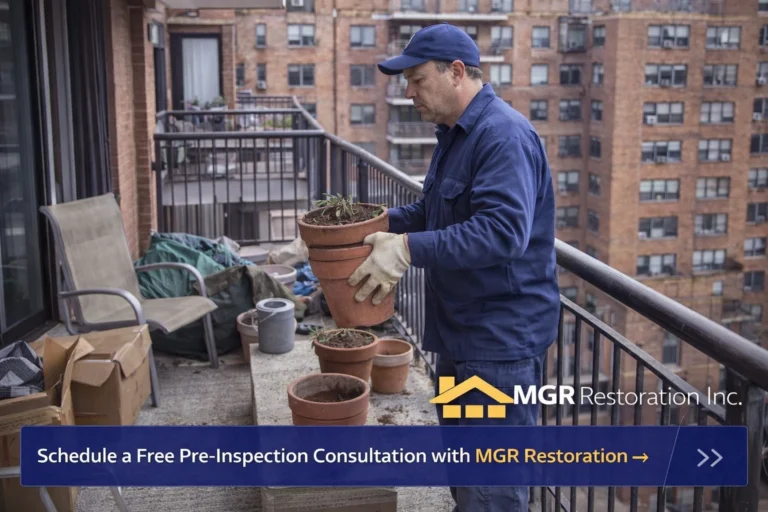
⦁ Clear clutter from balconies, terraces, and roof areas
⦁ Ensure fire escapes are unobstructed and easily accessible
⦁ Confirm window AC units are properly mounted with exterior brackets
⦁ Notify tenants about access needs and potential noise from scaffolding - Do a Quick Pre-Inspection Walk
Walk the building perimeter yourself. Look for visible cracks, loose masonry, peeling paint, rust stains, or damaged railings. Flagging these early lets you budget for repairs before the official report arrives.
What Happens During the Local Law 11 Inspection?
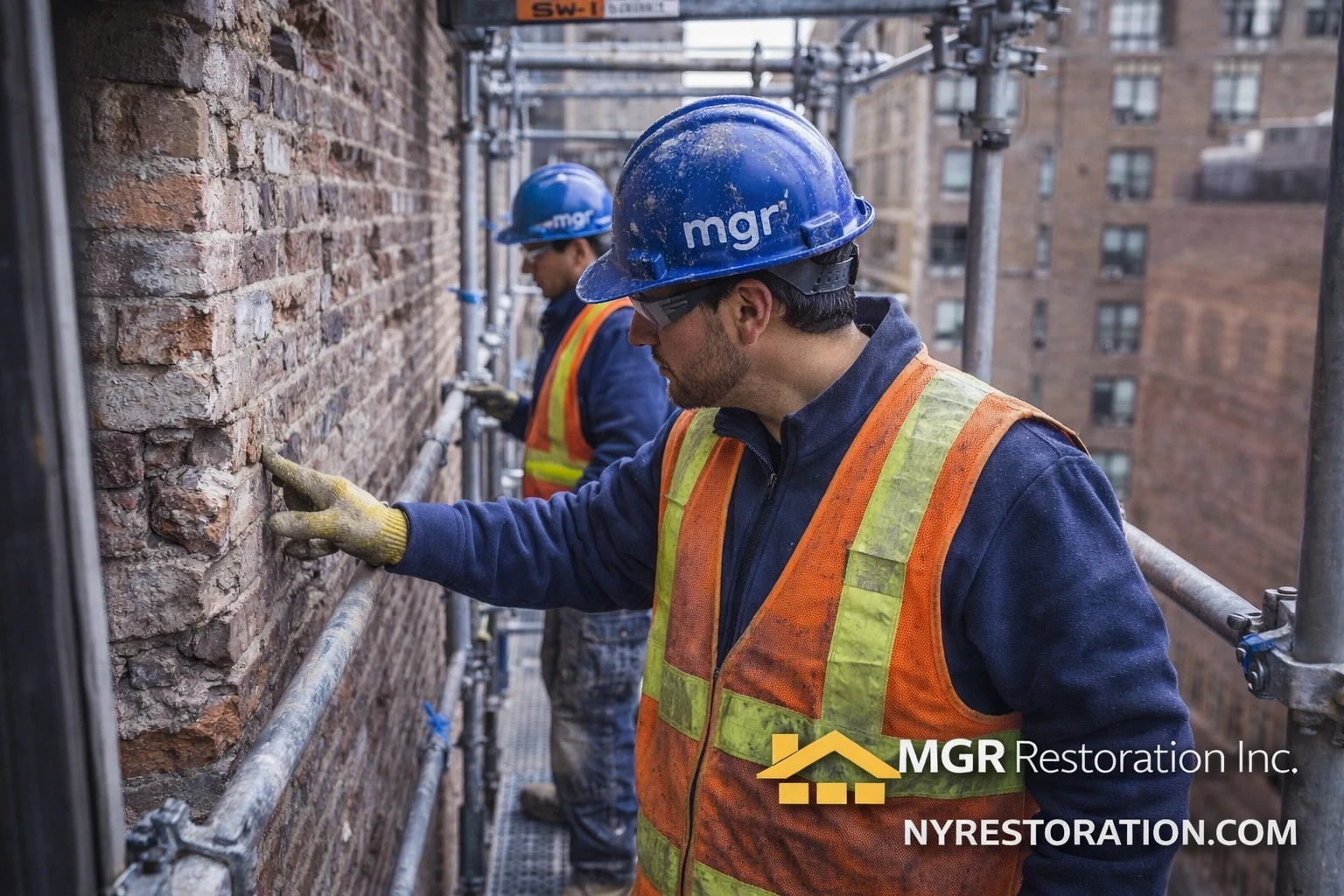
On inspection day, your QEWI will conduct what the law calls a critical examination — a hands-on, close-up physical assessment of your entire building exterior. Here’s exactly what they look at:
Exterior Walls and Facade Materials
The inspector examines every inch of your building’s outer skin — whether it’s brick, stone, concrete, glass, metal panels, or stucco. They look for:
⦁ Cracks, spalling, and missing mortar joints
⦁ Bulging or bowing sections in the wall
⦁ Water infiltration stains and efflorescence
⦁ Deteriorated sealants and caulking around windows
⦁ Rust stains from embedded metal components
Parapets and Cornices
Loose parapets and failing cornices are among the most common — and most dangerous — issues in NYC buildings. The QEWI checks for structural stability, anchor integrity, and signs of freeze-thaw damage.
Balconies and Guardrails
Balconies are inspected from above and, where possible, from below using scaffolding or rope access. The inspector checks structural connections, waterproofing, drainage, and the stability of all guardrails and railings.
Fire Escapes and Appurtenances
All attached exterior features — fire escapes, window lintels, AC unit sleeves, signage brackets, and satellite dish mounts — are part of the examination. These items are often overlooked but are legally required to be assessed.
The Hands-On Requirement
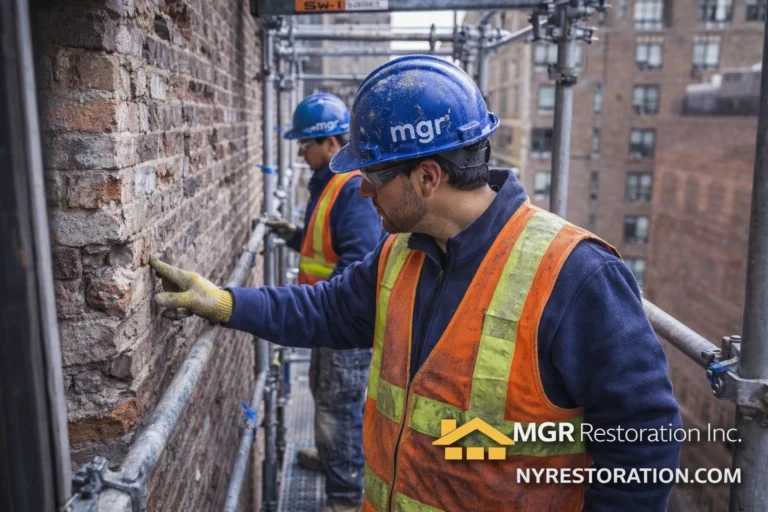
Unlike older regulations, Local Law 11 requires physical, close-up examination — not just a visual scan from the ground. Inspectors typically use scaffolding, swing stages, or rope access systems to get within arm’s reach of every facade surface. This costs more but catches problems early, before they become dangerous or catastrophically expensive.
The 3 Inspection Outcomes: Safe, SWARMP, or Unsafe
After completing the examination, your QEWI classifies your building’s facade into one of three categories:
Classification What It Means What You Must Do
✅ SAFE No defects or hazards found. Facade is in good condition. No action required. File report with DOB within 60 days.
⚠️ SWARMP Minor issues exist. Not immediately dangerous, but need attention. Complete all repairs before your next 5-year cycle ends. File report with DOB.
🚨 UNSAFE Serious defects pose immediate danger to the public. Install sidewalk shed immediately. Begin repairs within 90 days. Notify DOB right away.
What Happens If You Get an UNSAFE Classification?
An Unsafe finding triggers immediate legal obligations. As the building owner, you must:
- Receive formal written notice from your QEWI
- Notify the NYC DOB immediately
- Erect public protections (sidewalk shed, safety netting, or overhead bridge) at your own expense
- Begin repairs within 90 days — or apply for an extension with a documented repair plan
- Have your QEWI re-inspect and file an amended report once repairs are complete
Important: If SWARMP conditions from a previous cycle remain unrepaired when your new cycle begins, they automatically escalate to Unsafe. Don’t let deferred maintenance turn into an emergency.
Filing the FISP Report: After the Inspection
Once the inspection is done, your QEWI prepares a Critical Examination Report. This formal document records every finding, includes photographs, and assigns the official Safe/SWARMP/Unsafe classification.
The report is filed digitally through the NYC DOB’s DOB NOW: Safety portal. As the building owner, you must electronically sign an Owner’s Statement confirming you’ve reviewed the findings and understand your obligations.
Key deadline: The report must be filed within 60 days of completing the last inspection, and no more than 12 months after the physical exam itself. Missing this window triggers automatic fines.
| Fee / Penalty | Amount |
|---|---|
| Filing a Critical Examination Report | $425 |
| Extension to complete Unsafe repairs (per 90 days) | $305 |
| Late filing penalty (starts immediately after deadline) | $1,000+/month |
| Failure to correct Unsafe conditions | Escalating DOB violations + possible city-ordered repairs at owner expense |
How Long Does the Entire Process Take?
Most building owners underestimate the total timeline. Here’s a realistic breakdown:
| Finding and hiring a QEWI | 2–8 weeks |
| Scaffolding installation (if required) | 1–4 weeks |
| Active inspection / examination | 1–3 days (depending on building size) |
| Report preparation and DOB filing | 2–6 weeks |
| SWARMP repairs (if needed) | 2–12 months |
| Unsafe condition repairs | Immediately — begin within 90 days |
| Total (inspection only, no major repairs) | 2–4 months |
| Total (with significant repairs) | 6–18+ months |
Bottom line: Start early. Building owners who wait until the last six months before their sub-cycle deadline frequently run into contractor backlogs, scaffolding permit delays, and rushed filings. Hiring a contractor 12–18 months out gives you leverage on pricing and timeline.
MGR Restoration: Your Local Law 11 Partner in NYC
At MGR Restoration Inc, we specialize in Local Law 11 facade inspections, repairs, and full FISP compliance management across all five NYC boroughs. We’ve helped co-op boards, condo associations, and private building owners avoid violations, reduce repair costs, and file on time — every time.
Our services include:
⦁ Pre-inspection facade assessments and condition surveys
⦁ Coordination with licensed QEWIs and scaffolding vendors
⦁ Masonry repair, waterproofing, caulking, and concrete restoration
⦁ Sidewalk shed installation and removal
⦁ Full DOB filing support and permit management
Ready to get ahead of your Local Law 11 deadline?
Contact MGR Restoration Inc for a free consultation. We’ll confirm your sub-cycle deadline, assess your building’s current condition, and give you an honest scope and budget — before you’re facing fines. Call us at [phone number] or visit nyrestoration.com to request a quote.
📞 Call 718-240-0000 🌐 Visit nyrestoration.com