
Local Law 11 Contractors NYC — FISP Façade Repair & Compliance Experts
If your NYC building is six stories or taller, Local Law 11 (FISP) compliance is one of your most critical legal obligations as a building owner or property manager. The Facade Inspection Safety Program requires periodic close-up inspections of your entire exterior wall by a licensed Qualified Exterior Wall Inspector (QEWI) — and when deficiencies are found, mandatory repairs must be completed within strict DOB timelines.
MGR Restoration is one of New York City’s most experienced Local Law 11 contractors, with over 20 years of facade repair expertise across all five boroughs. We work directly alongside your QEWI to execute every repair identified in your FISP inspection report — from brick repointing and terracotta restoration to lintel replacement, parapet rebuilding, and balcony repair — on time, to certification standard, and in full compliance with NYC Department of Buildings requirements.
Whether your building has received a Safe, SWARMP, or Unsafe FISP rating, MGR Restoration has the crews, equipment, and expertise to respond. For Unsafe violations, we mobilize within 48 hours — installing sidewalk sheds, beginning repairs immediately, and working with your engineer toward amended report filing as fast as possible.
Missing your filing deadline costs $1,000/month in fines. Don’t wait — call MGR Restoration at 718-240-0000 for a free assessment.
How MGR Restoration Handles Your Local Law 11 Repairs
When your QEWI files a SWARMP or Unsafe report, the clock starts immediately. MGR Restoration takes the stress out of FISP compliance by managing the entire repair process on your behalf:
Step 1 — Free Site Assessment We visit your building, review your FISP inspection report, and assess every condition identified by your QEWI. We develop a detailed written scope of work with line-item pricing — no lump sums, no surprises.
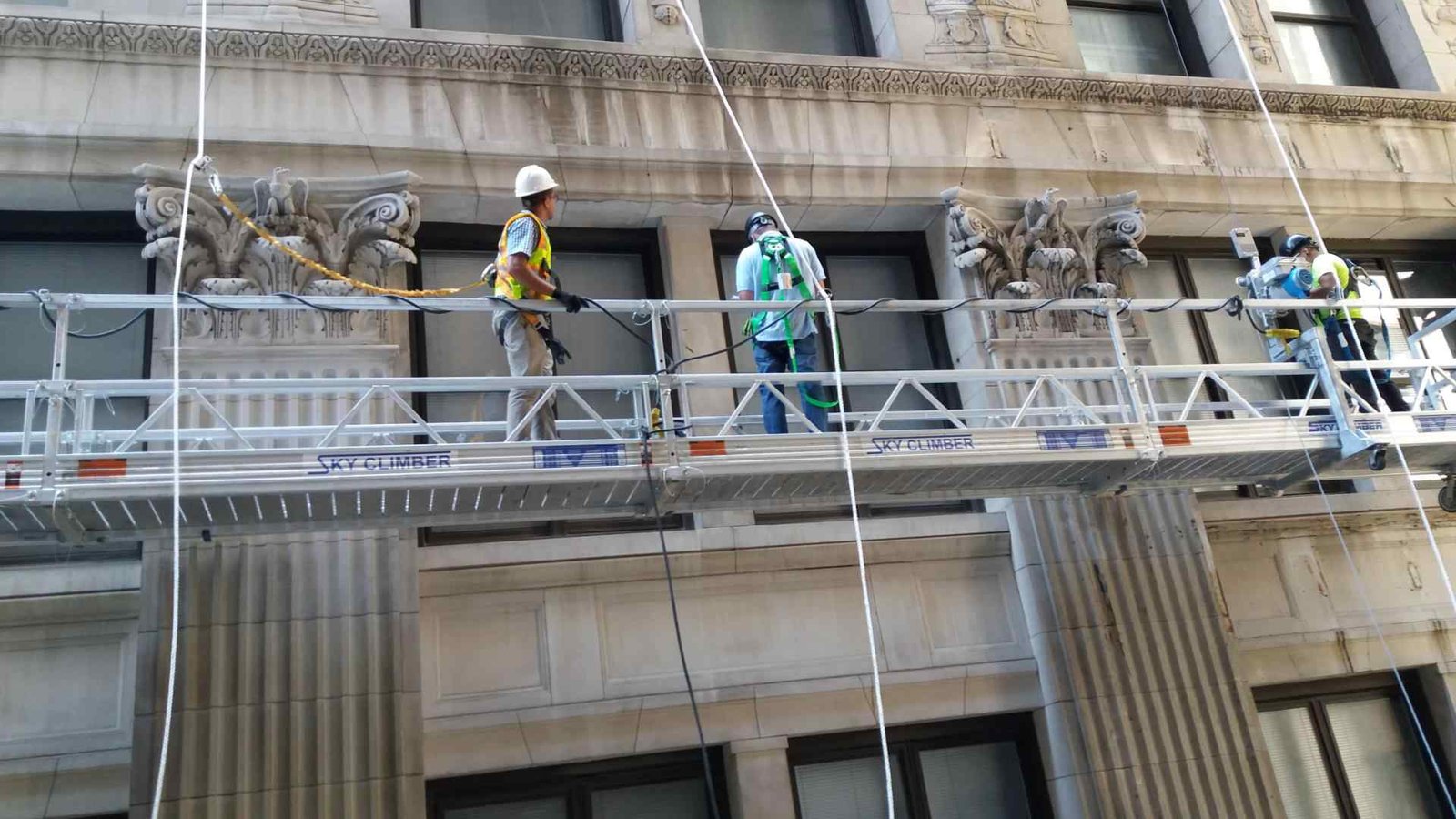
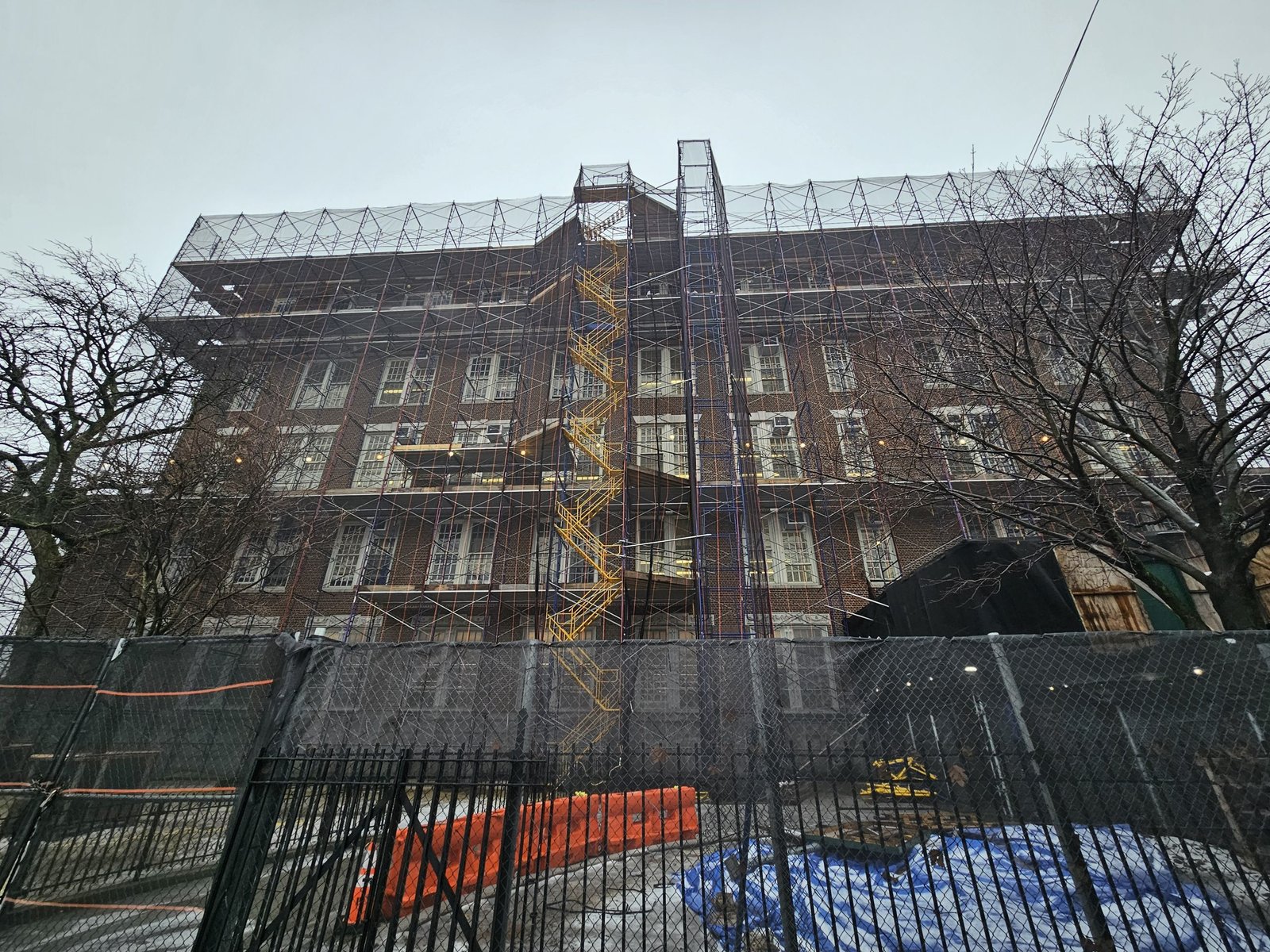
Step 2 — Permit & Access Setup We obtain all required NYC DOB permits and install scaffolding or suspended scaffold systems to safely access the full building facade.
Step 3 — Repair Execution Our licensed crews execute every repair per the approved scope — brick repointing, terracotta restoration, lintel replacement, parapet rebuilding, caulking replacement, balcony repair, and any other conditions identified in your FISP report.
Step 4 — Engineer Certification & DOB Filing When repairs are complete, your QEWI inspects and certifies the work. We provide all documentation required for the amended FISP report filing — closing out your violation cleanly.
Local Law 11 Repair Costs in NYC
FISP repair costs vary based on the scope of identified conditions, building size, height, and access requirements. Here is a general guide:
| Repair Type | Estimated Cost Range |
|---|---|
| Brick repointing — targeted scope | $8,000 – $25,000 |
| Lintel replacement (per lintel) | $1,500 – $6,000 |
| Terracotta repair (per unit) | $300 – $3,000 |
| Parapet repair & rebuilding | $5,000 – $20,000 |
| Balcony structural repair | $5,000 – $30,000 |
| Window caulking — full building | $2,000 – $8,000 |
| Sidewalk shed installation | $1,500 – $5,000 |
| Full facade restoration | $80,000 – $500,000+ |
All figures are general estimates. Contact MGR Restoration for a free, itemized written estimate based on your specific FISP report.
Why SWARMP Conditions Must Be Taken Seriously
Many building owners treat a SWARMP rating as a low-priority item — a problem to address “someday.” This is a costly mistake. Under FISP rules, any SWARMP condition that is not corrected before the end of the current inspection cycle automatically converts to an Unsafe violation — triggering immediate protection requirements, 90-day repair deadlines, and $1,000/month fines until resolved.
Addressing SWARMP conditions proactively — rather than waiting until the compliance deadline — gives you control over timing, contractor selection, and cost. Urgent Unsafe repairs done under deadline pressure almost always cost more than the same work done on a planned schedule.
MGR Restoration helps building owners develop a SWARMP repair program that addresses all identified conditions within the cycle window — avoiding the emergency costs of last-minute compliance.
Local Law 11 Compliance Across All NYC Boroughs
MGR Restoration executes Local Law 11 repairs for buildings throughout New York City:
- Manhattan — Midtown, Upper West Side, Upper East Side, SoHo, Tribeca, Financial District, Washington Heights
- Brooklyn — Park Slope, Brooklyn Heights, Williamsburg, DUMBO, Crown Heights, Bed-Stuy, Flatbush
- Queens — Astoria, Long Island City, Flushing, Forest Hills, Jackson Heights, Woodside
- The Bronx — Riverdale, Fordham, Concourse, Mott Haven, Pelham Parkway
- Staten Island — St. George, Stapleton, New Brighton, Tottenville
FAQ'S
What is Local Law 11 in New York City?
Local Law 11 — officially known as the Facade Inspection Safety Program (FISP) — is a New York City law that requires all buildings six stories or taller to have their exterior facades professionally inspected every five years by a Qualified Exterior Wall Inspector (QEWI). The law was enacted after a series of facade-related accidents in NYC, including falling masonry that injured and killed pedestrians. Today, FISP is one of the most important building compliance requirements for NYC property owners, co-op boards, and property managers. Non-compliance results in fines of $1,000 per month and escalating DOB violations that can affect your ability to sell or refinance the building.
What is the difference between SWARMP and Unsafe under Local Law 11?
Under FISP, your QEWI inspector classifies your building’s facade in one of three categories after inspection. Safe means no action is required until the next cycle. SWARMP (Safe With A Repair and Maintenance Program) means deficiencies exist that are not immediately dangerous but must be corrected before the end of the current inspection cycle — failure to do so automatically converts them to Unsafe violations. Unsafe means immediately hazardous conditions exist — loose masonry, displaced terracotta, cracked parapets, or failing balcony railings — that require a sidewalk shed installed within 24 hours and repairs completed within 90 days. MGR Restoration responds to Unsafe violations within 48 hours, mobilizing crews and equipment immediately to begin repairs and protect the public.
What are the Local Law 11 Cycle 10 deadlines in NYC?
The current FISP inspection cycle is Cycle 10, which began on February 21, 2025. Deadlines are staggered by the last digit of your building’s tax block number:
- Sub-cycle 10A (block numbers ending in 4, 5, 6, or 9): February 21, 2025 – February 21, 2027
- Sub-cycle 10B (block numbers ending in 0, 7, or 8): February 21, 2026 – February 21, 2028
- Sub-cycle 10C (block numbers ending in 1, 2, or 3): February 21, 2027 – February 21, 2029
To find your building’s block number, check your property tax bill or the NYC Department of Finance property search tool. If you are unsure which sub-cycle applies to your building, MGR Restoration can help you confirm your compliance deadline during a free site assessment.
What happens if I miss my Local Law 11 filing deadline?
Missing a FISP filing deadline triggers immediate financial penalties from the NYC Department of Buildings. The penalty structure is as follows: late filing results in $250 per month in fines until the report is submitted; failure to file entirely results in $1,000 per year plus additional DOB enforcement action; failure to correct an Unsafe condition results in $1,000 per month until the issue is resolved; and failure to install required pedestrian protection for an Unsafe condition costs $10 per day. Beyond the financial penalties, open DOB violations can complicate building sales, refinancing, and insurance renewals. If your building has missed a prior cycle, Cycle 10 includes a DOB Amnesty Program that allows late filers to resolve past violations — contact MGR Restoration to learn if your building qualifies.
How much does Local Law 11 repair cost in NYC?
Local Law 11 repair costs in NYC vary significantly based on the specific conditions identified in your FISP report, building size, height, facade material, and access requirements. Here are general 2026 cost ranges:
- Brick repointing — targeted scope: $8,000 – $25,000
- Full facade repointing — mid-rise building: $50,000 – $200,000
- Lintel replacement: $1,500 – $6,000 per lintel
- Terracotta unit repair: $300 – $3,000 per unit
- Parapet repair and rebuilding: $5,000 – $20,000
- Balcony structural repair: $5,000 – $30,000
- Window caulking — full building: $2,000 – $8,000
- Sidewalk shed installation: $1,500 – $5,000
MGR Restoration provides free, itemized written estimates after reviewing your FISP inspection report and completing a site assessment. We provide line-item pricing — no lump sums, no surprises.
How quickly can MGR Restoration respond to an Unsafe FISP violation?
MGR Restoration responds to Unsafe FISP violations within 48 hours of being contacted. We understand that Unsafe conditions require immediate action — a sidewalk shed must be installed within 24 hours of the DOB being notified, and repairs must begin immediately. Our team mobilizes quickly, installs pedestrian protection, begins the repair scope, and coordinates directly with your QEWI inspector to work toward amended report filing as efficiently as possible. We have resolved Unsafe FISP violations for buildings across Manhattan, Brooklyn, Queens, the Bronx, and Staten Island — and we understand the urgency that these situations demand. Call us immediately at 718-240-0000 if your building has received an Unsafe rating.
Do I need a separate contractor for Local Law 11 repairs, or can my QEWI do the work?
Your QEWI (Qualified Exterior Wall Inspector) and your repair contractor must be separate companies — this is a fundamental requirement of the FISP program. The QEWI is the licensed engineer or architect who inspects the building, prepares the FISP report, files it with the DOB, and certifies that repairs have been completed. The repair contractor — like MGR Restoration — is the licensed construction company that physically executes the repairs. The QEWI cannot certify their own contractor’s work, as this would be a conflict of interest. If you need a QEWI referral, MGR Restoration works alongside several experienced, licensed QEWI engineers and can provide referrals to building owners who need help finding a qualified inspector.
What types of repairs does MGR Restoration perform under Local Law 11?
MGR Restoration provides the full range of facade repairs required for Local Law 11 compliance — covering every material and every condition that a QEWI might identify in a FISP inspection. Our Local Law 11 repair services include:
- Brick and masonry repointing — removing deteriorated mortar and replacing with correctly specified lime-based mortars
- Terracotta repair and restoration — crack injection, anchor replacement, and custom unit fabrication
- Brownstone and limestone patching — color-matched repairs using appropriate soft mortars
- Lintel and shelf angle replacement — structural steel replacement with temporary shoring
- Parapet wall repair and rebuilding — including coping stone replacement and base flashing installation
- Balcony and terrace structural repair — concrete restoration, waterproofing, and railing replacement
- Window caulking and sealant replacement — full building recaulking programs
- Suspended scaffold installation — for high-rise facade access on mid-rise and tall buildings
- Sidewalk shed installation — for Unsafe condition pedestrian protection
Can Local Law 11 repairs be done on landmarked buildings in NYC Historic Districts?
Yes — MGR Restoration has extensive experience executing Local Law 11 repairs on NYC landmark buildings and buildings within Historic Districts regulated by the NYC Landmarks Preservation Commission (LPC). For landmarked buildings, all exterior repair work requires LPC approval before work can begin — and repair methods and materials must meet LPC standards for historic preservation. MGR Restoration prepares and submits complete LPC applications, recommends historically appropriate repair materials, and executes repairs that satisfy both DOB FISP compliance requirements and LPC approval conditions simultaneously. We have completed Local Law 11 repairs on landmarked buildings in Brooklyn Heights, Park Slope, Manhattan Historic Districts, and SoHo — navigating both regulatory frameworks efficiently.
What is the DOB Amnesty Program for Local Law 11 in Cycle 10?
The DOB Cycle 10 Amnesty Program is a special provision that allows buildings whose FISP reports were not filed in previous cycles (classified as NRF — No Report Filed) to file Cycle 10 reports early — stopping the clock on accumulated late filing violations and penalties. To participate, the building must have a Cycle 9 NRF status, the owner must retain a QEWI to conduct a current inspection and file a Cycle 10 report, and all pending civil penalties must be paid within 10 days of the report’s conditional acceptance by the DOB Facades Unit. Once the Amnesty report is approved, the building reverts to its applicable Cycle 11 sub-cycle. If your building has not filed FISP reports in prior cycles and has been accumulating penalties, the Amnesty program may be your most cost-effective path to compliance. Contact MGR Restoration for guidance on navigating the Amnesty process.
What building conditions typically result in a SWARMP or Unsafe rating?
FISP inspectors look for a wide range of facade conditions when classifying a building. Conditions that commonly result in SWARMP ratings include: deteriorated mortar joints requiring repointing, minor cracks in masonry or terracotta units, surface rust staining indicating lintel corrosion, failed window caulking, and minor spalling of brick or stone. Conditions that typically trigger Unsafe ratings include: displaced or bulging masonry, cracked or loose terracotta units at height, displaced parapet coping stones, severely corroded lintels with displaced brick above windows, structurally compromised balconies or railings, and any condition where elements are at risk of falling to the street or onto pedestrians. Understanding these conditions helps building owners recognize warning signs before a FISP inspection — and address them proactively at lower cost than emergency compliance repairs.
How long does Local Law 11 repair work take to complete?
The timeline for Local Law 11 repairs depends on the scope of conditions identified in the FISP report, the height and size of the building, access requirements, and whether permits or LPC approvals are needed. General timelines for common scopes:
- Targeted caulking replacement — full building: 1–2 weeks
- Targeted repointing — specific zones: 2–4 weeks
- Lintel replacement — multiple windows: 1–3 weeks
- Full facade repointing — low-rise building: 3–6 weeks
- Full facade restoration — mid-rise building: 2–4 months
- Complex restoration with LPC approval: 4–8 months including approval time
For Unsafe violations, we begin work within 48 hours of being engaged and work as rapidly as safely possible to resolve the condition and file the amended FISP report. MGR Restoration always provides a realistic written timeline estimate before work begins.