When you walk through the streets of New York City, the first thing you notice isn’t the lobby of a building—it is the exterior. This outer shell is known as the facade. Over time, this “face” of your property takes a beating from traffic pollution, bird droppings, mold, and harsh weather.
But what is facade cleaning exactly? Is it just a “car wash” for buildings, or is there more to it?
In this guide, we will break down the science and art of facade cleaning. You will learn why it is vital for your building’s health, the different methods used by professionals, and how it ties into New York’s strict Local Law 11 regulations.
What Is Facade Cleaning?
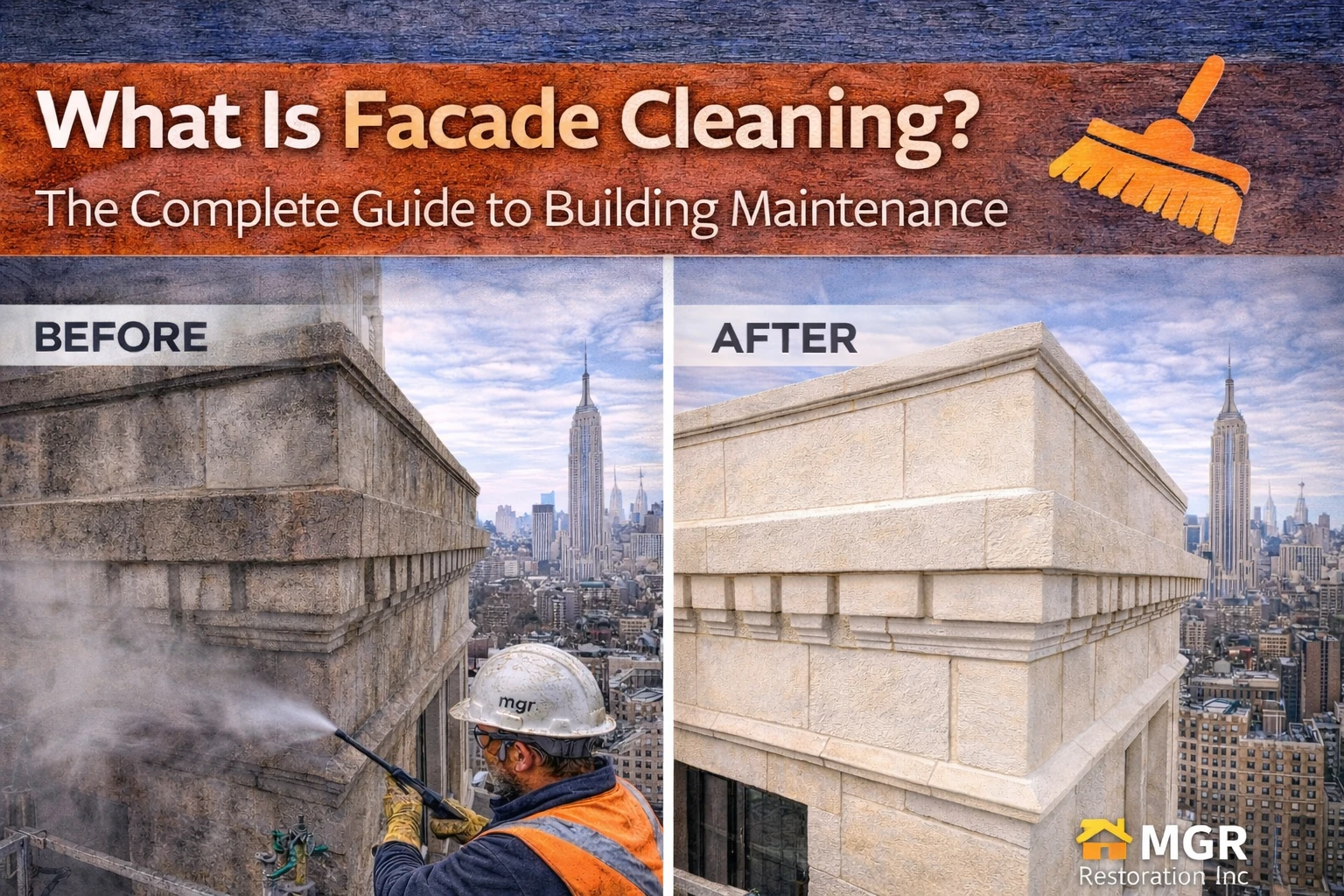
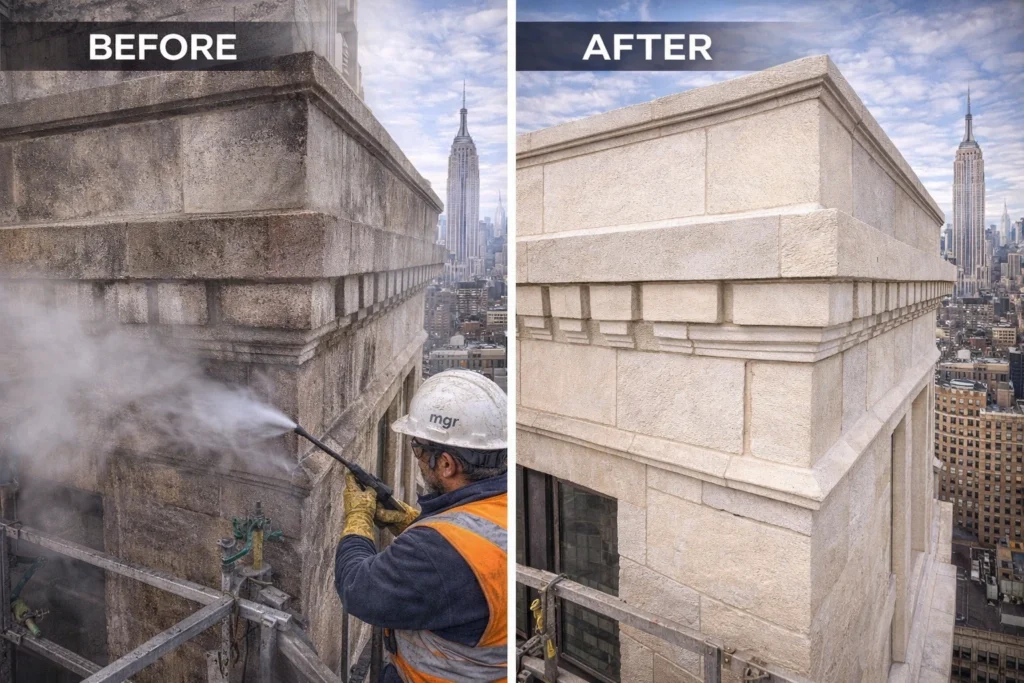
Facade cleaning is the process of removing dirt, grime, stains, and pollutants from the exterior surfaces of a building.
Think of a facade as a shield. It protects everything inside from wind, rain, and snow. However, this shield is often made of porous materials like brick, limestone, or brownstone. These materials act like sponges, soaking up carbon from car exhaust and salt from winter de-icing.
Professional facade cleaning uses specialized equipment—like hot steam, gentle chemicals, or low-pressure water—to lift these contaminants without damaging the underlying structure.
Why Is Facade Cleaning Important?
Many property owners think of cleaning as an “extra” expense. In reality, it is a crucial part of preventative maintenance. Here is why:
1. Boosts Curb Appeal and Property Value
A clean building looks professional and well-managed. Whether you own a commercial office or a residential brownstone, a sparkling exterior attracts better tenants and increases the overall market value of the property.
2. Prevents Structural Damage
Dirt isn’t just ugly; it’s destructive. Pollutants like sulfur and nitrogen oxides can mix with rain to create “acid rain.” This acid eats away at masonry and stone. By cleaning your facade, you remove these corrosive elements before they cause deep cracks or “spalling” (where the stone face flakes off).
3. Reveals Hidden Issues
A layer of thick grime can hide dangerous cracks or loose bricks. Cleaning the facade allows engineers and restoration experts to see the true condition of the masonry. This is especially important for Local Law 11 (FISP) inspections in NYC.
4. Health and Safety
Mold, algae, and bird droppings aren’t just eyesores—they can be health hazards. Algae can make sidewalks slippery when it washes down, and mold spores can eventually find their way into air vents.
Common Facade Materials in NYC
Different materials require different “diets” when it comes to cleaning. Using the wrong method on the wrong stone can cause permanent damage.
- Brick and Terra Cotta: Common in older NYC buildings. These require careful pressure management to avoid blowing out the mortar joints.
- Limestone and Brownstone: Very porous and sensitive. These often require “soft washing” or steam cleaning.
- Glass and Metal: Found on modern skyscrapers. These need specialized squeegee techniques and purified water to avoid streaks.
- Cast Iron: Historic facades that require rust removal and protective coatings to prevent corrosion.
Top 5 Facade Cleaning Methods
At MGR Restoration, we choose the method based on the “Three M’s”: Material, Modernity, and Mess.
1. Water-Based Cleaning (Pressure & Soft Washing)
- Low-Pressure (Soft Wash): Best for delicate, historic stones. It uses high water volume but low pressure to gently rinse away surface dirt.
- Pressure Washing: Used for hardy surfaces like concrete. It “blasts” away tough grime but must be used with caution to avoid “etching” the stone.
2. Steam Cleaning (Doff System)
This is one of the most effective methods for NYC masonry. High-temperature steam (up to 300°F) is applied to the surface. The heat kills biological growth like moss and algae and melts away oily pollutants without the need for harsh chemicals.
3. Chemical Cleaning
Sometimes water isn’t enough. We use substrate-specific chemicals to treat:
- Rust Stains: From old iron railings or lintels.
- Efflorescence: Those white, powdery salt stains on bricks.
- Graffiti: Specialized solvents that lift paint without scarring the stone.
4. Abrasive Cleaning (Sand/Media Blasting)
This is a heavy-duty method used to remove thick paint or deep mineral deposits. It is rarely used on historic landmarks because it can strip away the “patina” of the stone.
5. Laser Cleaning
The future of restoration. Laser beams can vaporize dirt and carbon without even touching the stone. It is eco-friendly and incredibly precise, making it perfect for ornamental carvings.
The Link Between Cleaning and Local Law 11 (FISP)
In New York City, buildings taller than six stories must undergo a facade inspection every five years under Local Law 11.
If your building is covered in 50 years of soot, a Qualified Exterior Wall Inspector (QEWI) might not be able to see cracks or “bowing” in the brickwork. We often recommend a “sample clean” or a full facade cleaning before an inspection to ensure your building gets an “Unsafe” or “Safe With a Repair and Maintenance Program (SWARMP)” status accurately.
Facade Cleaning: Step-By-Step Process
Inspection: We identify the stone type and the type of dirt (carbon, biological, or metallic).
Patch Test: We clean a small, hidden area to ensure the method doesn’t discolor the stone.
Protection: We cover windows, air conditioners, and greenery to protect them from water or chemicals.
Cleaning: Our team uses suspended scaffolding or booms to reach every corner.
Sealant Application: After cleaning, we often apply a water-repellent coating to keep the stone cleaner for longer.
FAQ
Why Choose MGR Restoration Inc?
Cleaning a building in NYC is about more than just a bucket of soap. It requires an understanding of structural integrity and historical preservation.
At MGR Restoration Inc., we are not just cleaners—we are restoration experts. We understand how water interacts with old mortar and how to handle delicate NYC landmarks.
- Decades of Experience: We know NYC’s unique architecture.
- Safety First: Fully insured and compliant with all OSHA and DOB regulations.
- Full Service: From cleaning to Local Law 11 repairs, we handle the whole envelope.
Ready to give your building a fresh start?
Contact MGR Restoration Inc. today for a free facade assessment.