New York City buildings face constant wear from harsh winters, heavy rain, pollution, and freeze-thaw cycles. Over time, brick mortar begins to crack, crumble, and weaken. That’s when property owners often hear two terms: brick pointing and repointing.
But are they the same thing?
If you own a brownstone, apartment building, commercial property, or landmark structure in NYC, understanding the difference between pointing and repointing can help you avoid costly structural damage and Local Law 11 violations.
In this guide, we’ll explain the differences, signs your building needs repairs, costs, and how professional masonry contractors in NYC handle the process.
What Is Brick Pointing?
Brick pointing is the process of applying or repairing mortar joints between bricks. It is often done during new construction or minor masonry repairs to strengthen and seal the brickwork.
Pointing improves:
- Structural stability
- Water resistance
- Exterior appearance
- Long-term durability
In NYC, proper brick pointing is essential because moisture penetration can quickly damage facades during winter freeze-thaw cycles.
Many property owners first notice issues when they see:
- Small mortar cracks
- Minor gaps between bricks
- Water stains on exterior walls
- Loose mortar dust
If left untreated, these small issues can eventually become serious facade hazards.
For buildings already showing visible deterioration, you may also need a professional facade inspection under Local Law 11 requirements. Related: “What to Expect During a Local Law 11 Inspection in NYC.”
What Is Repointing?
Repointing is a more extensive masonry restoration process where old, damaged mortar is removed and replaced with new mortar.
Unlike basic pointing, repointing focuses on restoring aging brick structures whose mortar joints have significantly deteriorated over time.
This process typically involves:
- Grinding or removing damaged mortar
- Cleaning the joints
- Applying new mortar
- Matching historic mortar color and texture
- Sealing and curing the surface
Repointing is extremely common in older NYC buildings, especially:
- Brownstones
- Pre-war apartment buildings
- Historic landmarks
- Commercial masonry buildings
Many NYC property owners schedule repointing after failing facade inspections or receiving DOB violations.
You can learn more about facade compliance in our guide: “SWARMP vs Unsafe NYC Facade Ratings Explained.”
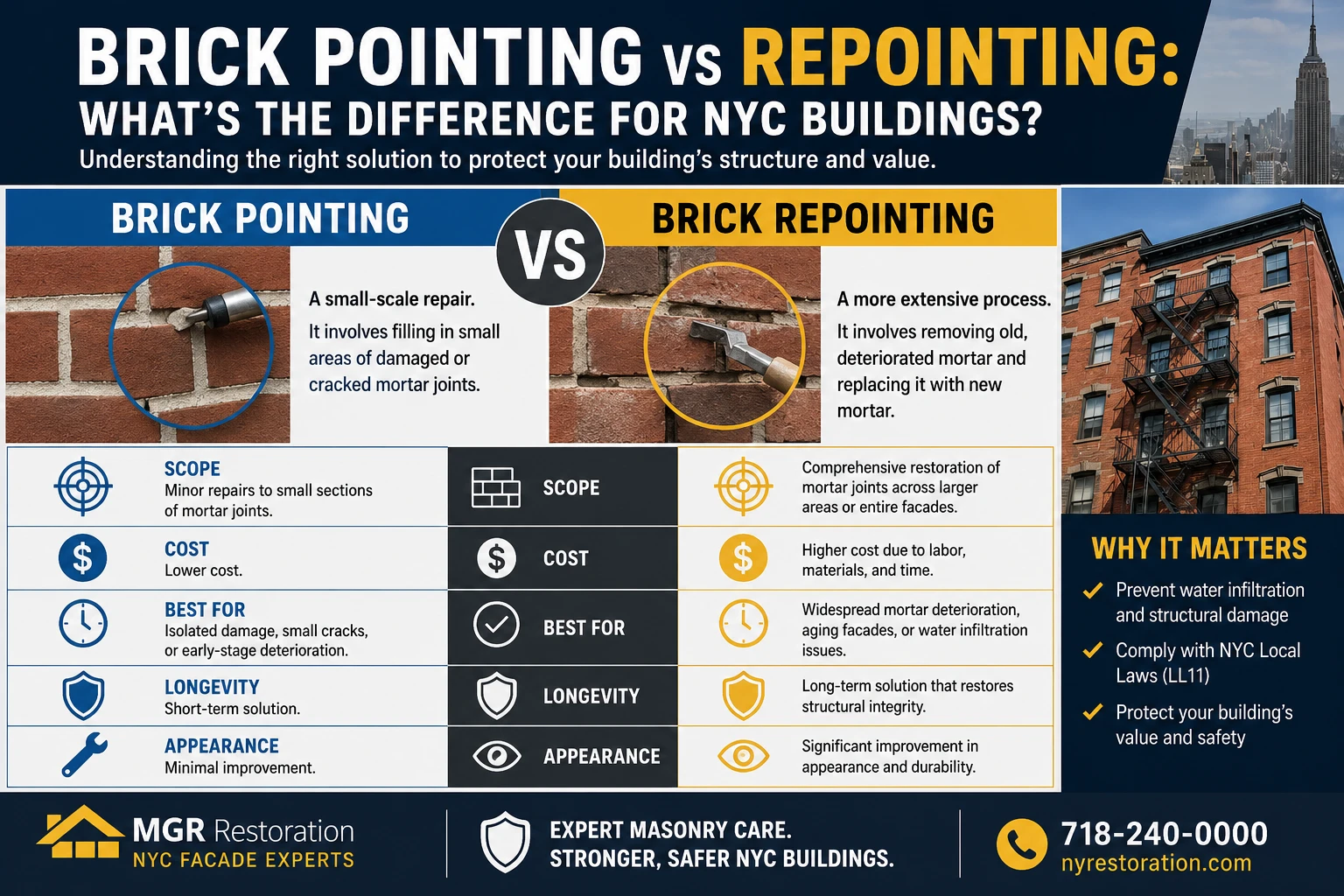
Brick Pointing vs Repointing: Key Differences
| Feature | Brick Pointing | Repointing |
|---|---|---|
| Purpose | Minor mortar repair | Full mortar restoration |
| Mortar Removal | Minimal | Extensive removal |
| Best For | Small cracks or gaps | Aging or failing mortar |
| Structural Impact | Preventive maintenance | Major restoration |
| Cost | Lower | Higher |
| Time Required | Faster | More labor-intensive |
In simple terms:
- Pointing is often preventative maintenance.
- Repointing is corrective restoration.
For many NYC buildings over 50 years old, repointing is usually the better long-term solution.
Signs Your NYC Building Needs Repointing
Because New York weather is harsh on masonry, mortar damage often appears gradually.
Common warning signs include:
Cracked or Missing Mortar
If mortar is crumbling or falling out, water can enter behind the facade and weaken the wall system.
Loose Bricks
Shifting or unstable bricks are serious structural concerns and may trigger DOB violations.
Water Leaks
Interior water stains near exterior walls often indicate failed mortar joints.
Bulging Brick Walls
Bulging masonry can signal dangerous facade instability.
White Powder (Efflorescence)
Salt deposits on brick surfaces often mean moisture is trapped inside the wall.
If your building shows these symptoms, it may also need a facade safety review. Related article: “Best Local Law 11 Contractors NYC.”
Why Repointing Matters in NYC
NYC buildings experience unique environmental stress compared to most cities.
Key factors include:
- Freeze-thaw cycles
- Heavy rainfall
- Pollution exposure
- High-rise wind pressure
- Aging historic masonry
Without timely repointing, buildings may develop:
- Unsafe facade conditions
- Falling brick hazards
- Water infiltration
- Structural deterioration
- Costly emergency repairs
In severe cases, owners may be required to install sidewalk sheds after failing facade inspections.
Related reading: “What Are Sidewalk Sheds? & Best Sidewalk Repair in New York City.”
Repointing and Local Law 11 Compliance
If your building is six stories or taller, facade maintenance is not optional.
NYC’s Facade Inspection & Safety Program (FISP), commonly called Local Law 11, requires periodic inspections of exterior walls and appurtenances.
Damaged mortar joints are one of the most common issues identified during inspections.
Professional repointing can help:
- Correct unsafe facade conditions
- Prevent SWARMP ratings from worsening
- Avoid DOB violations
- Improve long-term building safety
If you’re preparing for inspection, read:
- “Local Law 11 Facade Inspection Cost NYC 2026”
- “Local Law 49, 50 & 51 NYC Explained”
How Professional NYC Masonry Contractors Handle Repointing
Experienced masonry restoration contractors follow a careful process to protect building integrity.
Inspection and Assessment
Contractors inspect:
- Mortar deterioration
- Brick damage
- Water infiltration
- Structural movement
Mortar Matching
Historic NYC buildings require matching:
- Mortar color
- Texture
- Strength
- Composition
Improper mortar can damage older brickwork.
Mortar Removal
Damaged mortar is carefully removed without harming surrounding bricks.
Joint Refilling
Fresh mortar is applied and shaped to match the building’s original appearance.
Final Cleanup
The facade is cleaned and inspected for consistency and durability.
For landmark or historic buildings, proper restoration methods are especially important. Related: “Understanding Masonry Restoration: A Complete Repair Guide.”
How Much Does Brick Repointing Cost in NYC?
Costs vary depending on:
- Building height
- Accessibility
- Brick condition
- Scaffold requirements
- Historic restoration needs
- Extent of mortar damage
Typical NYC repointing projects may range from small localized repairs to full facade restoration programs.
Buildings requiring scaffolding or sidewalk sheds generally face higher costs.
For more pricing details, see:
“Local Law 11 Facade Inspection Cost NYC 2026.”
Can Repointing Improve Property Value?
Yes. Proper masonry restoration improves:
- Building appearance
- Structural integrity
- Weather protection
- Buyer confidence
- Compliance status
In NYC’s competitive real estate market, well-maintained facades are a major advantage for owners and property managers.
Clean, restored masonry also enhances curb appeal and supports long-term asset preservation.
Related article: “What Is Facade Cleaning? The Complete Guide to Building Maintenance.”
Choosing the Right Masonry Contractor in NYC
Not all contractors specialize in facade restoration or Local Law 11 compliance.
When hiring a masonry contractor, look for:
- NYC facade restoration experience
- Knowledge of DOB regulations
- Historic masonry expertise
- Licensed and insured teams
- Proven Local Law 11 project history
Experienced contractors can identify issues early before they become expensive structural problems.
You can also explore:
“Expert Brick Repair Specialists in New York City.”
Final Thoughts
Brick pointing and repointing both protect NYC masonry buildings, but they serve different purposes.
- Pointing handles smaller maintenance repairs.
- Repointing restores deteriorated mortar and protects structural integrity.
For NYC property owners, timely masonry restoration is critical for preventing water damage, avoiding facade violations, and maintaining compliance with Local Law 11 requirements.
Whether you own a brownstone in Brooklyn, a commercial building in Manhattan, or a pre-war apartment property in Queens, professional repointing helps preserve your building’s safety, appearance, and long-term value.